Did you know that? The Portuguese speaker is the one who speaks Portuguese. That's the language you'll have to use on your trip to Angola! Former Portuguese colony, this country attracts by the diversity of tourist and sports activities such as museums, beaches, fishing, hiking in parks and reserves, hunting, fauna and flora, and nature, wild and beautiful. Your stay in Angola will be synonymous with discoveries, real contacts and a return to your roots. So don't wait any longer, ask the embassy about the formalities to complete and take off for a unique adventure!
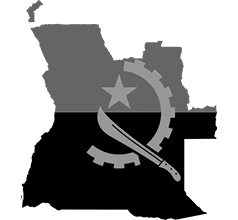
In southwest Africa, the Republic of Angola is bordered by the Atlantic Ocean to the west, and borders the Congo and the Democratic Republic of Congo (not the same thing...) to the north, Zambia to the east and Namibia to the south. Plateaux and reliefs form the country whose highest point culminates at 2620 meters of altitude, in Morro de Moco. More than 15 million inhabitants live there and the capital, Luanda, is located by the sea. With 1600 km of coast, it is a large country with an area of more than one million km².
Between the craft industry (ivory, wood, metal, painting on canvas etc.), the traditions of hunting and fishing, the paradisiac beaches, its tropical climate, the sensuality of its dances and its music, its waterfalls, its forests etc. do not look any more for reasons to come, live them. Everyone will find their happiness, just ask! It is up to you to imagine your stay according to your desires, nothing here will prevent the realization of your dream trip. The hospitality of the inhabitants, the beauty of the landscape, the whims of nature and the history of this country are waiting for you to fully express themselves!
The Angolan climate is more than pleasant. But be careful, depending on whether you are on the coast, in the North or in the South the weather changes and the humidity too. With an average of 18° in winter, temperatures can reach more than 35° in summer. There is a dry season from May to September and a rainy season between October and April. The thermal amplitude between day and night is such that it is always preferable to take a small wool, a raincoat, and closed shoes. So nothing will prevent you from taking a short night walk.
Since the conflicts stopped in 2002 (Angola had been at war for about thirty years), one can circulate again in the country without fearing to fall nose to nose with a mine. You can therefore inquire for a safari in the parks to see lion, gnu, elephant, buffalo, cheetah or gazelle. If you prefer the old stones, Angola will also seduce you with many colonial churches and fortresses. History has mixed architectures of various influences, because the country has a long tradition of Portuguese occupation but has also suffered Dutch domination (to a lesser extent).
Whether you come with family or friends, you will always be welcome in Angola. The country, especially the capital, offers hotels for all budgets. From the most luxurious room to the most spartan comfort, it's up to you. Whether you're the type to pack your bags and take advantage of the hotel infrastructure to go sunbath, or whether you prefer the mosquito backpack mode for crapahutage à la Indiana Jones, there's something for everyone. Then do not hesitate any more and embark for Angola!
Between mysterious gorges and impressive waterfalls, between tropical forest and savannah, between beach and museums, which visitor would you choose to be? Whatever your choice, the Angolans will do everything not to disappoint you and to make your stay an unforgettable one. You will return in wonder and invite your loved ones to try the adventure.
Art and culture in Angola
Angolan culture is derived from Bantu culture and Portuguese culture. Moreover, if Portuguese is the official language, Bantu languages are widely used, such as Umbudu and Kimbudu. To return with a typical souvenir, go to the craft markets, such as Futungo (one of the largest, south of Luanda) haggling over a wooden mask or ivory carving. Ask the inhabitants to tell you the story of the Capoiera and they may tell you that it is a ritual Bantu wedding dance exported to Brazil via slaves...
Did you know that? The Portuguese speaker is the one who speaks Portuguese. That's the language you'll have to use on your trip to Angola! Former Portuguese colony, this country attracts by the diversity of tourist and sports activities such as museums, beaches, fishing, hiking in parks and reserves, hunting, fauna and flora, and nature, wild and beautiful. Your stay in Angola will be synonymous with discoveries, real contacts and a return to your roots. So don't wait any longer, ask the embassy about the formalities to complete and take off for a unique adventure!
In southwest Africa, the Republic of Angola is bordered by the Atlantic Ocean to the west, and borders the Congo and the Democratic Republic of Congo (not the same thing...) to the north, Zambia to the east and Namibia to the south. Plateaux and reliefs form the country whose highest point culminates at 2620 meters of altitude, in Morro de Moco. More than 15 million inhabitants live there and the capital, Luanda, is located by the sea. With 1600 km of coast, it is a large country with an area of more than one million km².
Between the craft industry (ivory, wood, metal, painting on canvas etc.), the traditions of hunting and fishing, the paradisiac beaches, its tropical climate, the sensuality of its dances and its music, its waterfalls, its forests etc. do not look any more for reasons to come, live them. Everyone will find their happiness, just ask! It is up to you to imagine your stay according to your desires, nothing here will prevent the realization of your dream trip. The hospitality of the inhabitants, the beauty of the landscape, the whims of nature and the history of this country are waiting for you to fully express themselves!
The Angolan climate is more than pleasant. But be careful, depending on whether you are on the coast, in the North or in the South the weather changes and the humidity too. With an average of 18° in winter, temperatures can reach more than 35° in summer. There is a dry season from May to September and a rainy season between October and April. The thermal amplitude between day and night is such that it is always preferable to take a small wool, a raincoat, and closed shoes. So nothing will prevent you from taking a short night walk.
Since the conflicts stopped in 2002 (Angola had been at war for about thirty years), one can circulate again in the country without fearing to fall nose to nose with a mine. You can therefore inquire for a safari in the parks to see lion, gnu, elephant, buffalo, cheetah or gazelle. If you prefer the old stones, Angola will also seduce you with many colonial churches and fortresses. History has mixed architectures of various influences, because the country has a long tradition of Portuguese occupation but has also suffered Dutch domination (to a lesser extent).
Whether you come with family or friends, you will always be welcome in Angola. The country, especially the capital, offers hotels for all budgets. From the most luxurious room to the most spartan comfort, it's up to you. Whether you're the type to pack your bags and take advantage of the hotel infrastructure to go sunbath, or whether you prefer the mosquito backpack mode for crapahutage à la Indiana Jones, there's something for everyone. Then do not hesitate any more and embark for Angola!
Between mysterious gorges and impressive waterfalls, between tropical forest and savannah, between beach and museums, which visitor would you choose to be? Whatever your choice, the Angolans will do everything not to disappoint you and to make your stay an unforgettable one. You will return in wonder and invite your loved ones to try the adventure.
Art and culture in Angola
Angolan culture is derived from Bantu culture and Portuguese culture. Moreover, if Portuguese is the official language, Bantu languages are widely used, such as Umbudu and Kimbudu. To return with a typical souvenir, go to the craft markets, such as Futungo (one of the largest, south of Luanda) haggling over a wooden mask or ivory carving. Ask the inhabitants to tell you the story of the Capoiera and they may tell you that it is a ritual Bantu wedding dance exported to Brazil via slaves...