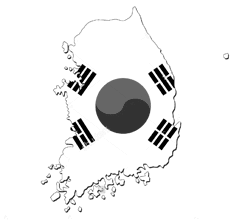
Seoul is the capital and largest city in South Korea. Located on the Han River in the northwestern part of the country's Han River, it has a population of about ten million people living within the city walls and 25,620,000 in its urban area (including Incheon), making it the third most populous megacities in the world after Tokyo and Mexico City, and just ahead of New York City. In addition, the city is home to almost half of South Korea's population. The demilitarized zone (DMZ) is approximately 45 kilometres from the city centre.
Founded two thousand years ago by the Baekje kingdom, one of the Three Kingdoms of Korea, Seoul is for more than five hundred years the capital of the kingdom of Joseon. At the end of the 19th century, breaking with a long tradition of isolation, Seoul opened its doors to foreigners, particularly to the United States: it was the first East Asian city to have electricity, running water, a telephone and a tramway network. Occupied by Japan from 1910 to 1945 and renamed Gyeongseong, the city became the capital of the Republic of Korea when it was proclaimed in 1948. It was severely damaged during the Korean War, one of the major events of which was the Battle of Seoul: the Gyeongbokgung Palace and its large gate were burned down. Reconstructed in the 1960s and 1970s with the help of the United States, it was rebuilt with h3 industrialization and became the face of a modernising South Korea. Since the 1990s, Seoul has seen a significant increase in its population, particularly due to the influx of migrants from South-East Asia.
There is a multitude of things to do and see, but here is a small selection of the visits and activities you can consider during your stay in Seoul:
The freshest and best seafood
Noryangjin Fisheries Wholesale Market is a huge wholesale seafood market and one of the largest in Korea, and its origins date back more than 80 years. The stands are lined up in rows with displays filled with fish and seafood, some of which will surprise you... and everything is freshly caught! Search, trade, and get the best products such as sashimi, octopus, sea cucumbers and many more. You can have everything cooked on site and enjoy your meal in a good atmosphere.
Eat and buy at Seoul's oldest market
Built at the very beginning of the 20th century, the traditional market in Gwangjang has about 5,000 independent shops and shops selling everything, including high quality hanboks (traditional Korean costumes). You can get lost in the maze of shops and alleys. On the spot you will be able to taste some local specialities such as bindaeddeok, a kind of really good salty pancake. Enjoy this with makgeolli, a rice alcohol drink. Everything is very authentic!
Tea and art at Kyung-In Museum of Fine Arts
Today Koreans may enjoy coffee, but tea and tea culture have been part of local culture for centuries and the Kyung-In Museum of Fine Arts is an excellent place to enjoy tea in a very special setting. The traditional Korean house serves a variety of seasonal and unique Korean teas and also has a small art gallery whose exhibitions change frequently. Pretty and quiet outdoor gardens change in appearance according to the season and time of day. The museum is located in an alleyway of the noisy Insadong artery, which makes it an ideal refuge for resting and clarifying ideas.
Relax and get rid of stress
Just like the famous saunas of Scandinavian countries, Korea has its own improved version of the baths and relaxation centers called jjimjilbangs. These establishments can be found everywhere in Seoul and are very popular with all (old people, young people, families, couples, friends, etc...). You will have a wide choice of sweat and relaxation spas (salt room, jade room, charcoal room, etc.). All this being inexpensive, don't hesitate to pay a little more for a skin scrub to come out completely clean and healthy.
Having fun along the river
To escape the hustle and bustle of urban life, the various parks on the Han River offer activities for all ages and interests. Bicycle paths are found everywhere to satisfy bicycle enthusiasts and jogging trails for those seeking exercise with a magnificent view of the river. In these parks, there are plenty of lawns where you can rest and have a picnic. In Korea, you can get free delivery wherever you are, so it's a great way to enjoy the long summer days in these parks.
Shopping like the locals do
While Myeongdong on the north side of Han River may be the popular place for tourists to shop, Garosugil is where the most fashionable people go. This street has a number of shops and independent stores that sell everything in the latest fashion trends and accessories. This is a great place to keep up to date with the latest Seoul fashions. Here you will find many cafes and restaurants as well.
Take advantage of the bustling nightlife centre in Seoul
The Itaewon neighbourhood has long been tainted by its sulphurous reputation and has experienced a renaissance in recent years and is now one of Seoul's most popular places to eat, drink and go out. While international cuisine makes Itaewon a pleasant place during the day, it's the nightlife here that has really exploded, competing with lively neighborhoods like Hongdae and Gangnam. The lounge bars fill up as soon as the sun sets, then long lines are formed in front of the most popular clubs like B1. In Itaewon, you will find all the types of atmospheres you want.
Visit the Leeum Samsung Leeum Art Museum
It is a private museum often forgotten by tourists, but it is well worth a visit to discover one of the best art collections in South Korea. The museum is well organized and easy to navigate with lots of explanations in English and audio guides available for purchase. Beautiful traditional and modern/contemporary Korean art is mostly exhibited here, while special exhibitions are often praised by local critics. You will also enjoy the architecture of the museum's two buildings, designed by renowned architects Mario Botta and Jean Nouvel.
Get a glimpse of traditional Korea
Seoul's horizon is a bit mundane and above all dotted with skyscrapers. But to get a glimpse of traditional Seoul, the Bukchon Hanok Village offers visitors a glimpse of what life was like in the past. These traditional houses were at the centre of the family life highly regarded in Korean Confucian culture. Sleeping at the inhabitant's home in these hanoks houses attracts tourists.
Climbing to the top of the highest point in Seoul
With the vast majority of the South Korean landscape mountainous, it is not surprising that climbing is an extremely popular sport for Koreans. While the most famous peaks and mountain ranges are located outside Seoul, the capital city has Mount Bukhansan (or "Mount Bukhan"), which is the highest peak in Seoul, rising to 836.5 metres above sea level and is a difficult but rewarding climb for experienced hikers and beginners. There are many routes to the different peaks but no matter which one you decide to take, the stunning views of Seoul and the surrounding area are an experience in itself. Beyond the superb stroll, it is an opportunity to meet on the paths the Koreans very friendly and share a snack with them along the paths. Remember to take plenty of water and put on your shoes.