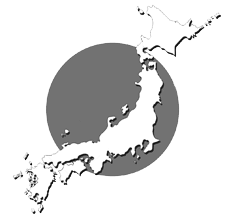
Tokyo, formerly Edo is the capital of Japan. It is the largest city in Japan, with more than 13,622,267 intramural inhabitants in 2016 and 42,794,714 in the agglomeration, and forms the world's most populous urban area. Located on the east coast of the main island of the Japanese archipelago, Honsh? Tokyo is one of Japan's 47 prefectures. The main political centre of the archipelago since the seventeenth century, the city has been home to most of the country's institutions: the residence of the emperor of Japan, the Prime Minister, the seat of the Diet (the Japanese parliament), the Cabinet, the ministries that constitute it and all foreign embassies.
And who knows, you may also come across salary-men with a hangover after a dinner party with friends or colleagues. They will probably sleep somewhere else than at home, in a Capsule Hotel for example... In this crowded city, how is urban planning organised? Well, that's a delicate question! At first under the name of Edo, the capital of Japan was prosperous and many traditional Japanese houses were built. And as economic development helped, over the years, typical Japanese houses were replaced by higher and higher buildings. Farewell to houses with paper doors and small garden, and hello concrete and modernity.
Often criticized, Tokyo's urban planning policy has led to what it is today: a mixture of ancient and ultra-modern, like most of the world's major cities... To get around, Tokyo's public transport network (including the famous Yamanote Line) is dense and well organized. Fortunately, the magic of this megapole is preserved by an interesting sense of design and also by typical Japanese surprises that charm the eye. Thus we find a small temple (or rather an altar) shintoist between 2 buildings at the bend of an alley of Akihabara.
Articulated around its main districts such as Harajuku, Shibuya, Akihabara, Ginza, Ikebukuro, Shinjuku, but also its lesser-known but densely populated districts such as Adachi, Edogawa, Nerima, Ota, or Setagaya, the city of Tokyo is nevertheless astonishing at all times.
The avant-garde megalopolis stretches like a nebula. But more than a city, Tokyo is a fascinating juxtaposition of heterogeneous neighborhoods. Skyscrapers, illuminated signs, temples and traditional shrines: the trip to Tokyo opens the doors of a city with many facets.
Furiously contemporary, Tokyo, formerly Edo, is undergoing a meteoric transformation. In this metropolis, the present is like the past and flirts constantly with the future.
Travel to a city in perpetual motion
The city ignores linear narrative. It reinvents itself every day, decomposes and reconstructs itself. Twice stripped of the map, twice burned, first by Kanto's tremor in 1923, then by the carpets of incendiary bombs of the American army in March 1945, Tokyo was reborn from its ashes at the price of a heavy price.
"It's not a city, it's a cluster of cities." Marguerite Yourcenar
Its urban landscape fascinates and disconcerts. The builders love it. Everyone does what they like and always finds their happiness. A visit to the museum, a beautiful escape in a park or garden, a gourmet descent into the basement of a department store, a stroll through the streets with an ever more innovative contemporary architecture, the discovery of a Shintô sanctuary (original religion of Japan) or a Buddhist temple, the spectacle of a hieratic nô or a sumo tournament... tourism in Tokyo seems boundless.
Visiting Tokyo is intense and each neighbourhood has its own style and uses. Shinjuku, Ginza, Asakusa, Shibuya, Odaiba or the electronic district Akihabara tell a plural and universal story, the story of the impermanence of things. Here, a natural note always blends in with modern life, a special feature of the Tokyo trip that surprises many travelers. An old willow keeps an alley full of electric wires. Cherry trees are the first to announce the coming of spring. Crazy weeds take refuge in the cracks of a building. The sea spray reminds us that Tokyo, the "Capital of the East", is a port city in the Pacific Ocean. Tsukiji, the world's largest fish market, bears witness to this.
At night, the Tokyoites forget about stress. From bars to restaurants, from jazz clubs to nightclubs, everyone is allowed, according to their desires, to continue the adventure until the last metro and even, for the inveterate night owls, until the end of the night, when finally the crows don't croak anymore.