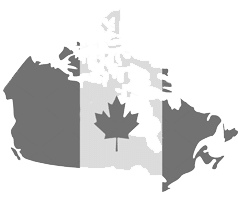
Edmonton is the capital of the province of Alberta.
Edmonton is the capital of Alberta, the western province of Canada. Although it is not the most populous city (it is its neighbour Calgary), it still has 1.1 million inhabitants with the surrounding suburbs. This makes it the most northerly city on the American continent with over one million inhabitants. It is crossed by the Saskatchewan River, which is over 500 kilometres long and defines its landscape.
Edmonton is a young city, thanks in part to the prestigious University of Alberta (U of A) which is located there and which was once again ranked among the top 5 Canadian universities in 2016. Like all the major cities of the country, it is also cosmopolitan: more than 20% of its population is of Asian origin. If English is the most widely spoken language, Edmonton has a large Francophone community, the Franco-Albertans, who have founded many associations in the city. At the University of Alberta, the Saint-Jean campus is dedicated to those who wish to study in French, and offers courses in a multitude of fields.
Before the arrival of Europeans in the mid-18th century, Edmonton (and more broadly the province of Alberta) was populated by Aboriginal tribes, mainly Cree and Blackfoot peoples. Anthony Henday, British explorer of his state, was the first to leave a written record of his discovery of this little explored region. He had been sent by Hudson's Bay Company, a fur trading company.
Henday's role: to establish a privileged commercial relationship with the local populations, who were already collaborating with competing companies, notably the French. Although Anthony Henday eventually left Hudson's Bay Company, the fur trade was so successful in the area that Fort Edmonton was established in 1795, shortly after Fort Saskatchewan was built by the rival North West Company north of Edmonton. Thus, the fur trade was at the origin of the settlement of the first Europeans in the region.
The construction of the Canadian Pacific Railway, which linked Edmonton as early as 1885, brought many more settlers. Edmonton was officially created in 1892, and it was not until 1905 that it was declared the capital of the province of Alberta. The city then experienced a recrudescence in its population, which passed from 6000 to 78 000 in the years which followed. The University of Alberta was founded in 1908. The second population peak occurred in 1947, after the discovery of oil just at the entrance to the city. An urban development plan was then put in place, and the city experienced an important economic boom, from which it still benefits today.
Fort Edmonton Park the cultural must for anyone who wants to learn more about the city and its origins. This open-air museum includes both original buildings and reconstructions. It allows visitors to immerse themselves in the daily life of the region's first settlers.
Edmonton River Valley: What makes this city so charming is the omnipresent nature. This urban park, the largest in all of Canada, is established around the river and provides access to trails, parks, bike paths...
West Edmonton Mall: For entertainment on long winter days, be sure to visit North America's largest shopping centre. In addition to shops, there are an amusement park, a water park, a skating rink, cinemas, a mini-golf course, a shooting gallery, a hotel...
Whyte Ave, to go out for lunch and a drink with Edmonton's youth.
Museums, and there are many: the Royal Alberta Museum, the Legislature Building, the Art Gallery of Alberta...
The Muttart Conservatory, botanical garden which includes four greenhouses in the form of pyramids and a large public garden.
Edmonton is a festive city... which is why it is nicknamed "The Festival City" :
Edmonton International Fringe Theatre Festival, where nearly 100,000 people gather each August for performances and a multitude of attractions.
Edmonton Folk Music Festival, an opportunity to immerse yourself in the rhythm of country, Celtic, gospel and soul classics along the river.
International Street Performers Festival, or StreetFest, every July. 10 days of outdoor performances: acrobatics, dancers, musicians...
Canadian Birkebeiner Ski Festival, which brings together ski enthusiasts every winter.