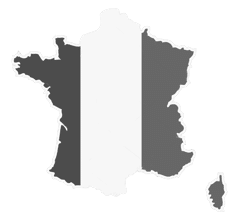
A country of art and history with magnificent landscapes and a strong intellectual culture, not forgetting the art of living, rich in castles, vineyards and villages of character, France is ideally situated in the heart of Western Europe. From this beautiful country, you can easily travel by plane or train to other nearby European cities: London, Berlin, Madrid or Rome, among others. Cradle of Descartes and Molière, France has inspired the world with the writings of its intellectuals, plays and novels.
France is an essential destination for history and architecture lovers. You can go back in time to the Stone Age by discovering its prehistoric sites and notably the famous Lascaux cave or the Breton megaliths. If a dive into Roman times is tempting, the country does not lack remains dating from the time when Gaul was part of the immense Roman empire. The Pont du Gard is a typical work of this period, in the same way as the arenas of Nîmes and Arles. From the fortresses of the Middle Ages to the Eiffel Tower or the Millau Viaduct, passing through the palaces of the powerful courtiers of King Louis XIV, the French architectural heritage is very rich throughout the territory.
It is also the country of churches, abbeys, monasteries and especially cathedrals whose craftsmen have competed to erect buildings higher and higher, decorated with multicolored stained glass. Another good reason to travel in France, even if you are not passionate about culture, is that it is good to live there, mainly around the table: the richness of its wines and its gastronomy will make your taste buds travel with the liking of the thousand and one flavours of its terroirs. In addition to many local culinary specialities, there is a great variety of landscapes depending on the region you visit: red rocks falling steeply into the emerald water in Corsica, peaks at 4000 metres in the Alps, forests as far as the eye can see in Sologne, Norman meadows and groves, ancient volcanoes of Auvergne, Atlantic islands and shores.... invite the traveller to admire the beauty of nature while visiting the riches of the country. Each region is committed to preserving its history and traditions, which gives the visitor the opportunity to go from surprise to discovery by travelling through the same country.
France enjoys a temperate climate on the Atlantic coast, which borders the country to the west, from Brittany to the Spanish border. This mildness gradually gives way to a harsher and more continental climate as we approach the eastern border with Germany and Switzerland. The south of the country, near the Mediterranean, enjoys a sunnier climate. In winter, the peaks of the Alps lend themselves more to winter sports, while the other seasons are ideal for discovering the countless treasures scattered all over the territory: the castles of the kings of France along the Loire, the shores of the Côte d'Azur or the Breton gulfs.
It is only during a stay in France that you will be able to meet so many castles of all styles, times and sizes, from the immense royal domains with their hectares of forests to the manor of a provincial lord. Each French region retains a strong identity: Brittany, Corsica or the Basque Country are the most assertive, going so far as to use their own language (Basque) or dialects, which accentuates the change of scenery. From north to south, culinary specialities, wines and cheeses change according to the terroirs, but the cuisine remains as delicious as ever, which is another characteristic feature of France.
Profusion of civil, military or religious monuments to visit. Castles from all periods, from the Middle Ages to the 19th century. Prehistoric and Roman remains. Thousands of museums to discover painters, homes of famous artists or local specialities. The variety of the landscapes and the richness of the gastronomy on a single territory.
Art and culture in France
There are many festivals, the most famous being the one dedicated to cinema in Cannes, theatre in Avignon, jazz in Juan les Pins, comic strips in Angoulême and contemporary music in La Rochelle. Painting has many museums dedicated to painters of all periods, both in Paris and in the major cities, with a speciality for art nouveau in Nancy, contemporary art at the Maeght Foundation in Vence and the new Beaubourg centre in Metz. In Vendée, the Puy du Fou is famous for its sound and light show with costumed actors. Brittany resonates in summer to the rhythm of the Fest-Noz where Celtic and modern music mix.
What to visit in France
If you are staying in Paris, go up to the Butte Montmartre to discover the city at your feet. You can't go through the Louvre Museum, so set your priorities. The Eiffel Tower and Notre Dame Cathedral are worth a visit. Don't forget to enjoy a drink on the terrace of a café in Saint Germain des Prés. If possible, plan a stopover at the Palace of Versailles. Then a detour to Normandy with a rental car in France to visit a unique place: Mont Saint Michel and the landing beaches. The Loire castles, notably Chambord and Chenonceau, are also a must. Further south, the old town of Avignon and its palace of the Popes is an ideal starting point to discover Provence.
We tend to forget how beautiful France can be!
Between summits, massifs, ocean, lakes, waterfalls, there are thousands of breathtaking landscapes, each one as breathtaking as the next, just waiting to be discovered.
The circus of Gavarnie
The Cirque de Gavarnie is a limestone amphitheatre of spectacular dimensions within the Pyrénées-Mont Perdu site, listed as a UNESCO World Heritage Site (as a natural AND cultural site). 1500m high, this vertical wall has a circumference of 6.5 km. In its heart flows the 423 m high Grande Cascade, one of the highest waterfalls in Europe!
The plateau of Valensole in the Alpes-de-Haute-Provence
On nearly 800km², the Valensole Plateau is a large attic of trees and plants both Mediterranean and mountainous: pines, olive trees, apple trees, oaks, almond trees, vineyards, and especially lavandins!
Lake of Sainte Croix in Moustiers Sainte-Marie
The third largest lake in France, the Sainte-Croix dam lake stretches nearly 10 kilometres long and 2 kilometres wide, offering outings by pedal boat, sailing, boat, canoe-kayak and swimming.
The organs of l'Ille sur TetIn the Eastern Pyrenees
Rock interlacing, miniature canyons, giant chimneys, lace ramparts: the Orgues d'Ille-sur-Têt, also called "fairy chimneys", are ochre earth ridges that result from natural erosion.
Unique geological site in the Pyrenees and in France, the organs date back more than two million years!
Mount Needle In Chichil ianne, Isère
A favourite place for mountaineers, Mont Aiguille, which reaches 2,087 metres in height, is a "piece" of the adjoining cliff from which it has detached !
The Ochres of Rustrel In Rustrel in the Luberon
Rustrel's Provençal Colorado and its reddish-orange hues are remnants of the exploitation of ochre quarries and offer decorations worthy of the landscapes of the American State.
The volcanoes of Auvergne in Auvergne
With its famous puy de Dôme (reaching 1,465 m) and the puy de Sancy, the highest point of the Massif Central (1,886 m), the Puys range and its more than 80 volcanoes is a candidate for UNESCO World Heritage !
Summer and winter alike, it is the ideal place to practice outdoor activities: hiking, mountain biking, skiing, etc..
The Tufs waterfalls in the Jura
At the origin of this site accessible by a hiking trail: the waters of the Cuisance which seep into caves and pierce a rock called tuff in multiple waterfalls!
The gorge s of the Tarnin Lozere
It is the long work of erosion of the river of Tarn which is at the origin of this superb canyon of nearly 600m of depth and more than 50km long, which are the Gorges of Tarn.
Lake Allos in the Alpes de Haute-Provence
Europe's largest high-altitude natural lake, Lake Allos, formed by snowmelt, is nearly 50 metres deep and covers some 54 hectares! It takes 3 hours walking to reach it, from the Val d'Allos.
The gorges of the Ardèche in Ardèche
Classified as a "national nature reserve", the Ardèche gorges stretch over 32 kilometres, between canyons, large cliffs and a 60m high natural arch (the Pont d'Arc), and are home to some thousand animal and plant species.
Canoeing, hiking, or via the scenic road, between caves and viewpoints.
The sea of ice in Chamonix
With 5km long and 200m thick, the Mer de Glace is the largest glacier in France!
To discover on the spot: the ice cave hand-cut every year and the Glaciorium, educational and play centre.
The Marshes of Vigueirat in Camargue
On no less than 1200 hectares, the protected natural site of the Marais du Vigueirat is the perfect place to observe no less than 2000 species of fauna and flora, including bulls, Camargue horses, and of course the famous pink flamingos!
Lake Annecy
Also called the "blue lake" for its beautiful color, Lake Annecy, of glacial origin, was formed well 18 000 years ago. It is fed by no less than 7 rivers including an underwater spring.
You can discover it on foot or by bike over the 40 kilometres of its circumference, on the water by boat, canoe, pedal boat, or even Stand Up Paddle, or even in the air, by paraglider!
The caves of La Balme in Isère
Some 40 minutes from Lyon, the Balme Caves have labyrinths, small pools, an underground lake, stalactites and stalagmites, and...no less than 22 species of bats.
Lake Chalain in Jura
The largest and surely the most beautiful natural lake of the Jura, the lake of Chalain which extends on more than 2km², seduces by its beaches (including a naturist), its water sports (but without motor for the respect of the fauna), and the practice of fishing.
The cliffs of Etretat in Normandy
Source of inspiration of many painters, the cliffs of Etretat surprise and delight because of their verticality, their whiteness limestone and their beautiful pebble beaches.
It will be necessary to go on the spot to better discover the Arche, the Aiguille, the Manneporte, and the "hole with the man", rock formations which also make the fame of the cliffs of Etretat.
The Grotto of Osselle Near Besançon, between the Jura and the Doubs
Among the oldest known caves, the Grotte d'Osselle can be visited for its impressive geological formations, but also for its historical importance: it is here that the first complete skeleton of cave bears was discovered, now exhibited in the British Museum!
Pilat Dune in Gironde
The Dune du Pilat is the highest in Europe, framed almost 3km by the Landes de Gascogne forest and the Bassin d'Arcachon sea. With a height of up to 117 meters, it is the perfect place for paragliding and sliding!
Salagou Lake in the Hérault
An artificial lake created in the 1960s, Lac du Salagou is no less beautiful, surrounded by unusual red and black hills.
Sailing, hiking, mountain biking and other activities are available.
The troglodyte village in Vienna
Overlooking the Creuse, these troglodyte caves were used as a refuge in the Middle Ages, then as housing for the weavers of the region until the 19th century. A story to discover on this site called Ethni'Cité.
Lac des Rousses in the Jura
At an altitude of 1,059 m, Lac des Rousses offers beach and nautical activities (non-motorized), picnic area and bike path, petanque ground and pedestrian path, all in respect of the fauna and flora of the site.
Mont Saint-Michel
Classified as a UNESCO World Heritage Site, Mont-Saint-Michel offers impressive tides from its bay.
The Mont which becomes again an island in the event of strong tide, is impossible to circumvent for its abbey, its restaurants, and especially its superb sight on the bay.
The veil of the Bride in Champsaur & Valgaudemar, in the High Alps
In a large glacial cirque of the Parc national des Ecrins, near the Dévoluy massif, you can discover the Voile de la Mariée waterfall from which you can reach the superb Lauzon lake in 1h30 easy walk, or the Vallonpierre refuge and its lake.
The Queuille Meander in the Puy-de-Dôme
One goes to the side of the village of Queuille and its point of view called Paradise, to admire the Meander of Queuille, a loop naturally formed by the Sioule river.
The Huchet Current in Aquitaine
In Moliets-et-Maa, the Huchet Current winds between sandy banks connecting Léon's pond to the sea.
With an ever-changing morphology, this estuary is classified a Nature Reserve because of its fauna and flora, especially its marsh and tropical vegetation, which even earned it the name of Amazonia Landaise !
The Calanques of Cassis in the Bouches-du-Rhône
Large cliff chain of 4 000 hectares plunging into the sea, 20km of hiking trails, numerous coves with clear waters and superb blues: the coves between Cassis and Marseille are a real paradise.
The Arcachon basin
Great Landes lake, the Arcachon basin which opens onto the Atlantic Ocean is full of inland seas suitable for fishing, oyster production... and strolls on board pinasses (typical boats).
Lake Lispach
With an area of 10 ha, located at 900m altitude in the Chajoux valley at La Bresse, Lake Lispach of glacial origin is one of the most remarkable sites in the Vosges Massif.
We discover it via a path lined with educational panels, to learn more about the fauna and flora of this lake bog.
The Hedgehog waterfalls
The "Hérisson" torrent is at the origin of no less than 31 waterfalls called Cascades du Hérisson. Among these many jumps, the best ones are the Girard Jump (35m high), the Grand Jump (60m high) and the Fan (65m high).
From the Maison des Cascades, it will take a little less than 3 hours of hiking to discover them all.
Gastronomic specialities in France
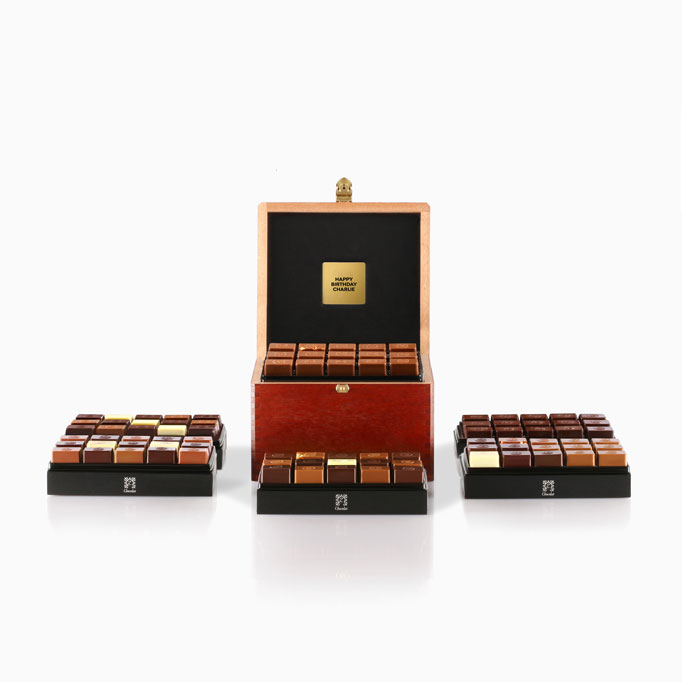
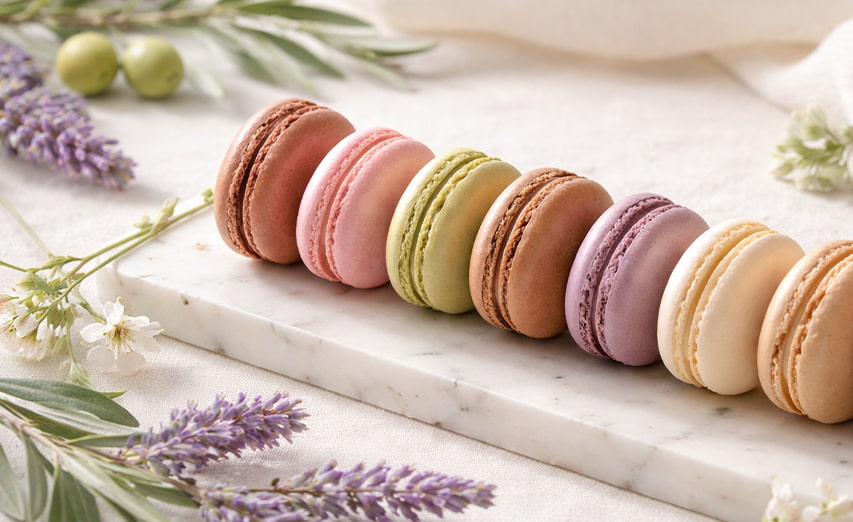
This is what you think about when you take a flight to France... There are goose foie gras, cassoulet and truffles from the south-west, while the Atlantic coast is famous for its seafood platters. In Normandy, you can taste camembert, cider and many specialities with fresh cream. One finds game, venison accompanied by light wines (Saumur-Champigny, Brouilly) in the Loire countries. To taste the wine, visit farms and the huge cellars of Champagne, go to Reims. Try Alsatian sauerkraut and its fruity white wine, Gewürztraminer. The Lyon region is famous for its cold meats and sausages. Not forgetting its countless cheeses (Roquefort, Camembert).